




Critical Pipeline Replacement in Dehydration Plant with Operational Continuity
Record-time intervention that avoided operational losses in a dehydration plant.
Case Study Nº
192
Customer
|
Working Conditions
Pexgol Pipes
Application
Lenght
Categories
The Challenge
Petróleos Sudamericanos is an Argentine company dedicated to the exploration and production of hydrocarbons, operating key assets in the Catriel Oeste region.
In this project, the dehydration plant plays a critical role: treated water is used for injection in secondary recovery processes, while oil is conditioned for delivery to refineries. The operation required the continuous transport of a fluid composed mostly of water (98%) with the presence of hydrocarbons (>2%), creating highly aggressive conditions for pipeline materials.
The existing GRP pipeline suffered recurrent failures due to constant corrosion, forcing shutdowns of both the plant and the oilfield for repairs. These stoppages resulted in significant production losses, increased operational costs, and disruptions across the entire transport and dispatch chain.
Additionally, since this was a critical line within the process, any intervention involved high operational and economic risk, as downtime needed to be minimized.
The Solution
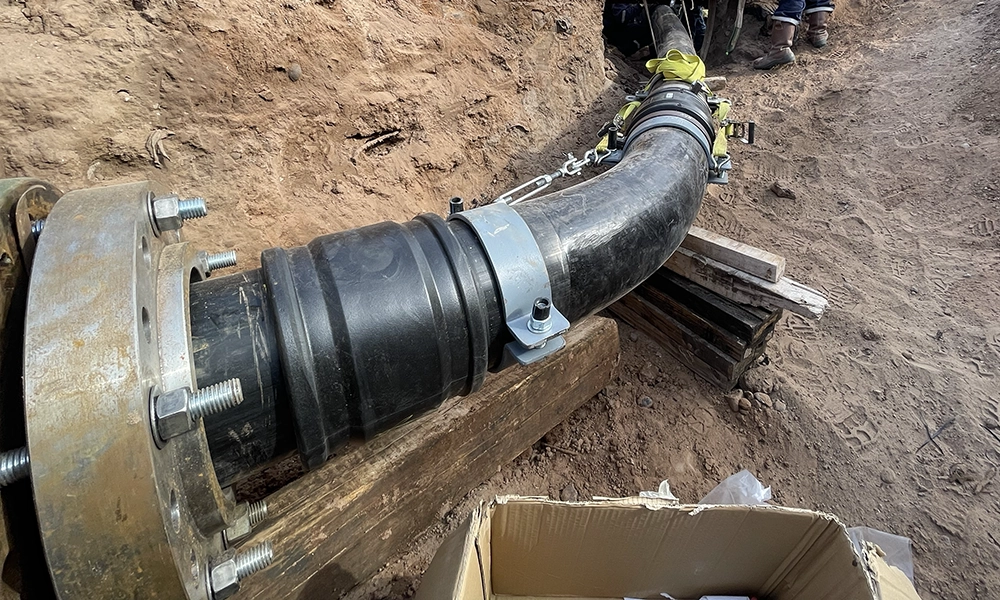
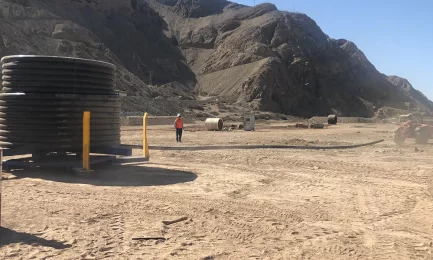
To definitively solve the problem, a solution using 250 mm (Class 15) Pexgol pipes was implemented, designed to operate at a pressure of 3 kg/cm² and a temperature of 20°C, with excellent performance in fluids containing hydrocarbons.
The pipeline replacement was executed as a critical operation completed in just two working days. Thanks to the material’s flexibility, availability in long lengths, and ease of installation using electrofusion fittings, intervention time was significantly reduced.
As a result, the oilfield was shut down for only 8 hours, avoiding production losses, idle equipment and labor costs, and the need to reschedule field operations.
The chemical resistance of PE-Xa to hydrocarbons and its immunity to corrosion eliminated the root cause of the problem, ensuring reliable long-term operation. Additionally, the material’s light weight and fast installation enabled efficient execution even in a sensitive operational environment.
This solution not only resolved the immediate issue but also optimized system operational continuity, reducing risks and costs associated with future interventions.
Related Case Studies
Технологическая вода — транспортировка рассола
|
Перекачка сточных вод от горных работ
|
Рудничные дренажные линии
|
Транспортировка сжатого воздуха
|
Facing the Challenges of the Neuquén Terrain in Argentina
|