


Efficient and Safe Irrigation in Secondary Leaching with Pexgol
Minas Argentinas Replaces HDPE with Pexgol in Its Secondary Leaching Project
Case Study Nº
181
Customer
|
Working Conditions
Pexgol Pipes
Application
Lenght
Categories
The Challenge
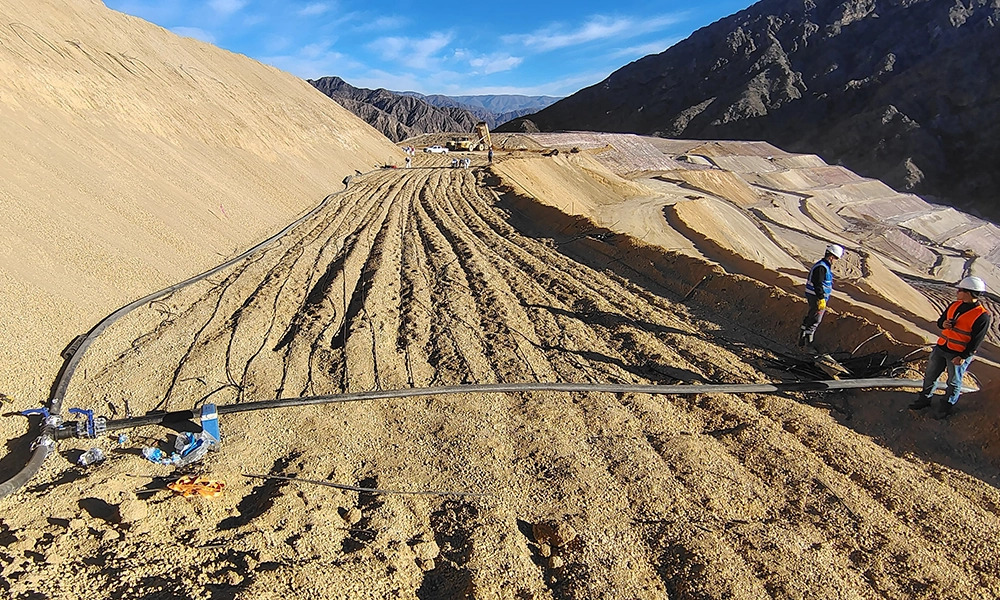
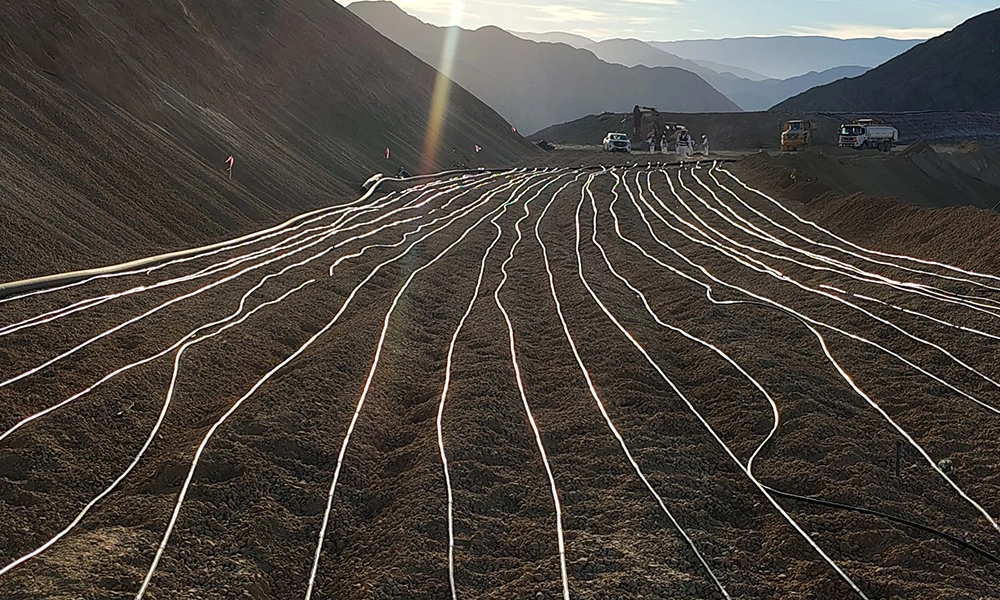
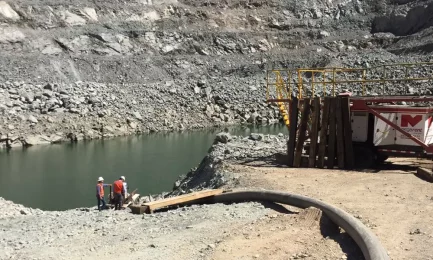
Minas Argentinas S.A., operator of the Gualcamayo mine in San Juan, Argentina, needed to optimize the irrigation system for secondary leaching pads that transport cyanide solutions at temperatures between -10°C and +20°C, with operating pressures between 2 and 4 bar.
Previously, the system used 8” and 4” HDPE pipes, which presented several issues. Their rigidity made it necessary to use numerous elbows and fittings to adapt the line from the crest to the slope of the pad. This not only increased system costs but also complicated installation and maintenance. Additionally, the weight of HDPE pipes required heavy machinery for handling, which was not feasible given the site’s limited space and access restrictions.
The Solution
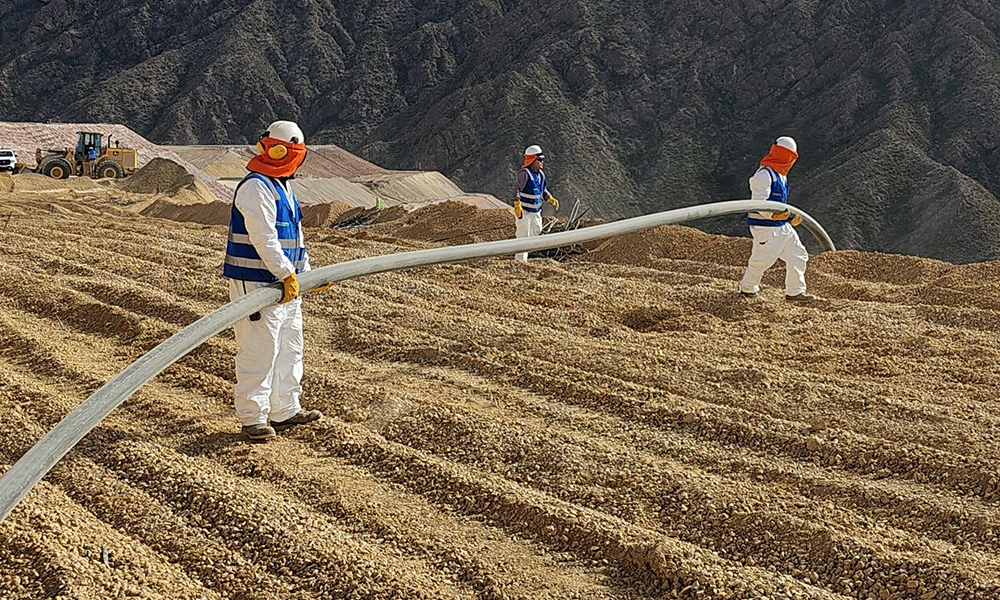
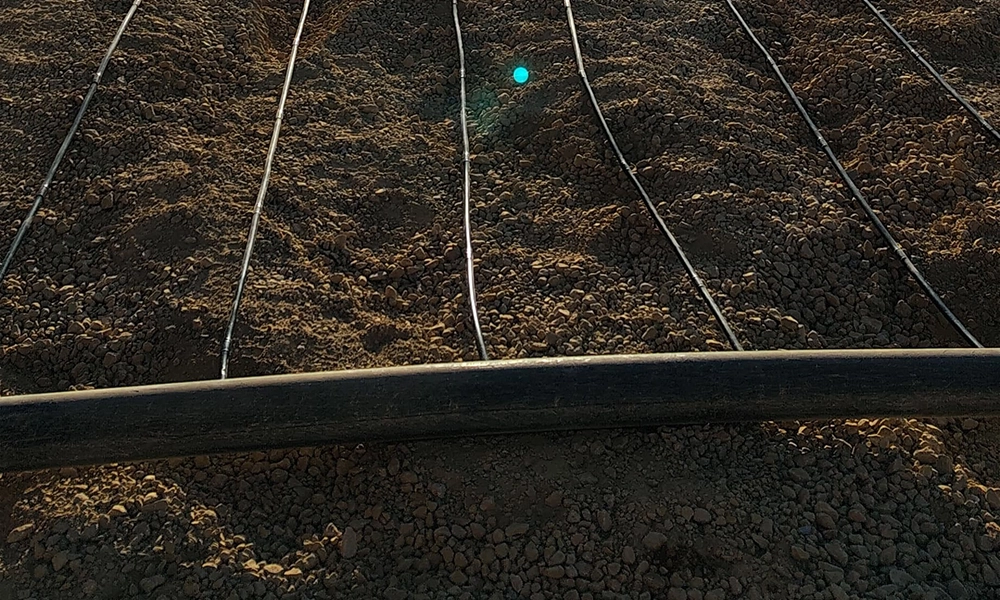
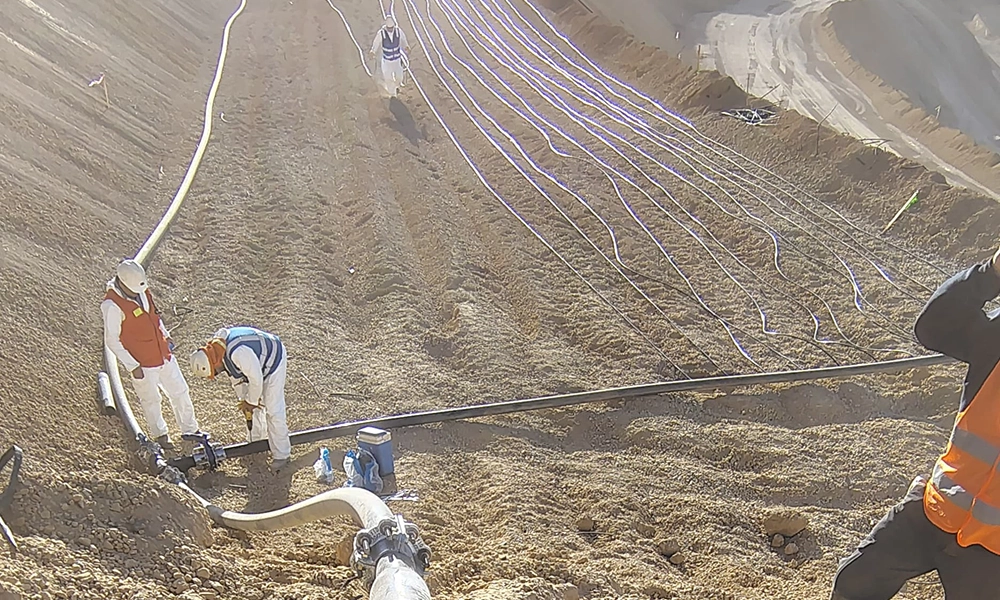
The solution came with the installation of 200 meters of Pexgol 110 mm Class 10 pipe, which, thanks to its flexibility, allowed the elimination of most of the elbows and fittings required with HDPE. This feature made it possible to run the line from the crest to the bottom of the pad without structural modifications.
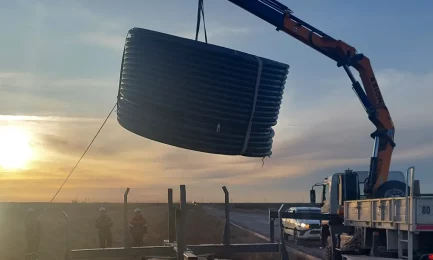
Pexgol’s lightweight design was also a decisive factor: the pipe was unrolled 1,000 meters away from the installation site and dragged into position using a backhoe, without the need for cranes or specialized equipment. The reduced space in the assembly area was no longer a limitation. The entire installation—including the connection to the main line, coupling to the pad, and attachment of irrigation hoses—was completed in just 8 hours.
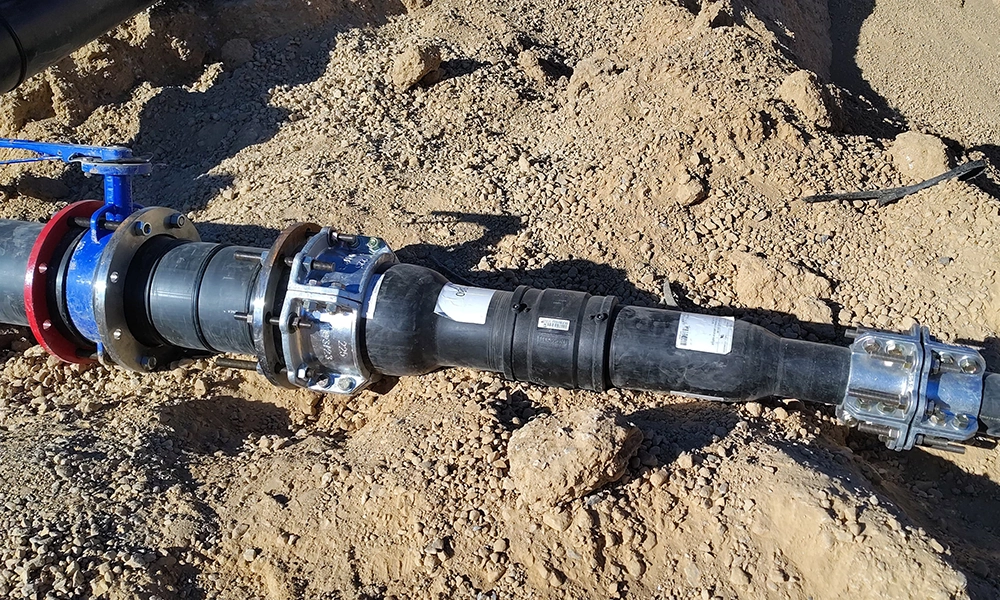
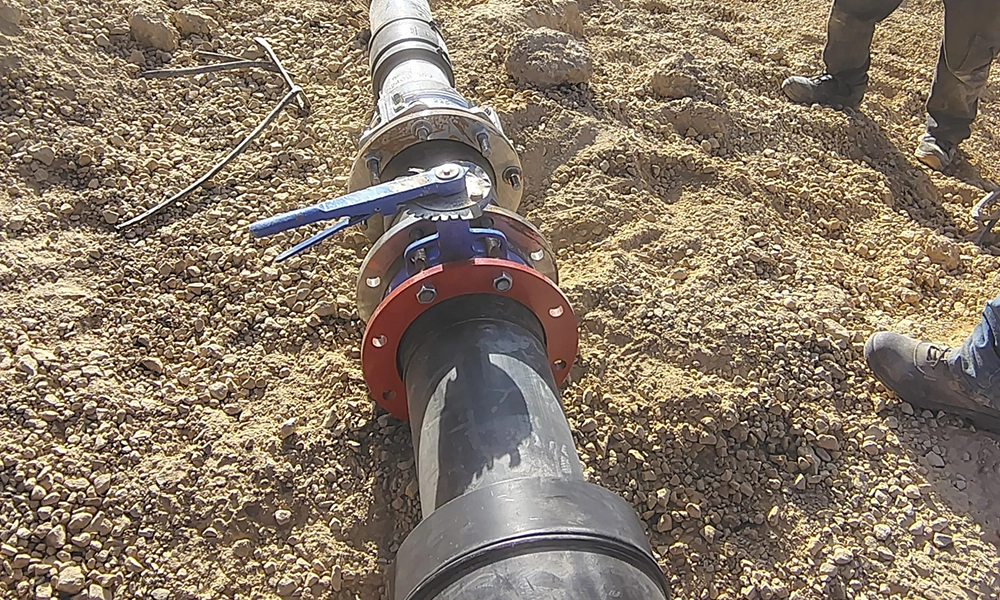
Accessories such as electrofusion couplings, flanged couplings, electrofusion tees, and PEX reducers were used to ensure secure and durable connections.
The incorporation of Pexgol not only solved the technical issues of the previous system but also significantly reduced installation and operating costs, improving the safety and efficiency of the entire secondary leaching process.
Related Case Studies
Mine Dewatering at Low Temperature
|
Palm Oil: Transport of Leached Mud
|
Water Drainage at an Open-Cast Mine
|