


Optimization of Potable Water Supply for 1,600 residents
Enhanced hydraulic and structural reliability for critical community infrastructure.
Case Study Nº
188
Customer
|
Working Conditions
Pexgol Pipes
Application
Lenght
Categories
The Challenge
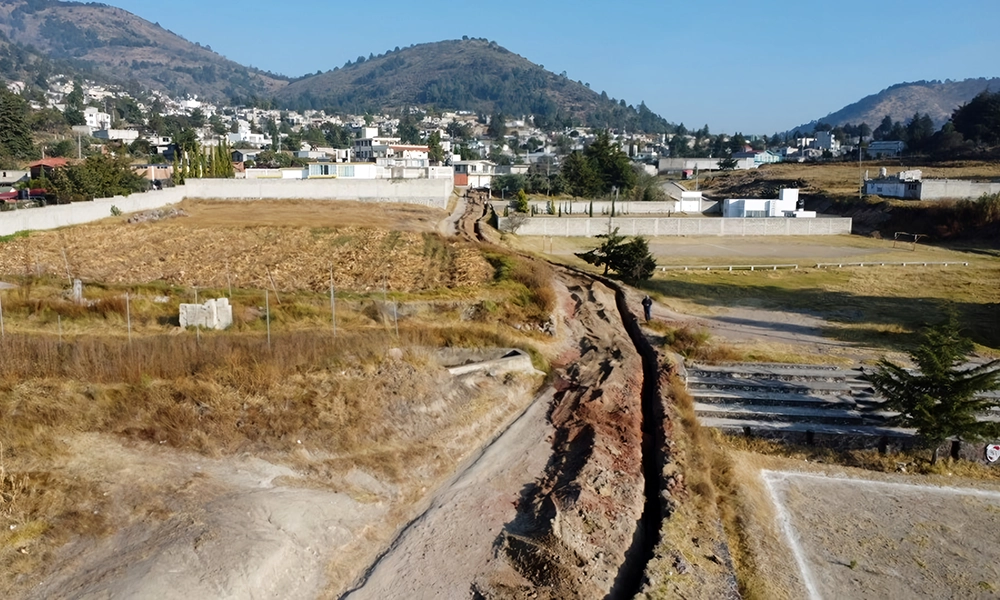
The Rincón de la Candelaria community, located in the municipality of Atlacomulco, State of Mexico, at 2,614 meters above sea level, relies on a pumping system to supply potable water from a groundwater source, with an operating flow rate of 50 lps (177 m³/h) and working pressure of up to 242 psi.
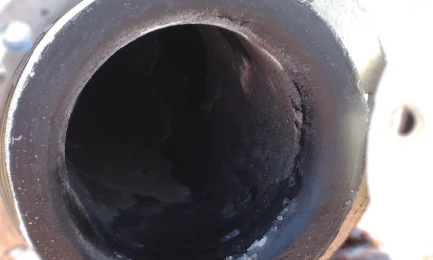
The existing pipeline, constructed with 6” SDR 9 HDPE 4717 pipe, presented recurring failures at the thermofusion joints.
Despite having protection accessories at the pumping station, the required pipeline route—crossing urbanized areas between houses and roads—prevented the installation of additional surge protection devices.
As a result, the pipeline was exposed to transient pressure increases caused by water hammer phenomena inherent to well operation. These overpressures compromised the structural integrity of the pipeline and caused service interruptions for approximately 1,600 residents.
Additionally, the groundwater contained minerals such as calcium, magnesium, iron, manganese, sodium, potassium, and bicarbonates, which may promote scaling and affect hydraulic performance in conventional systems.
The Solution
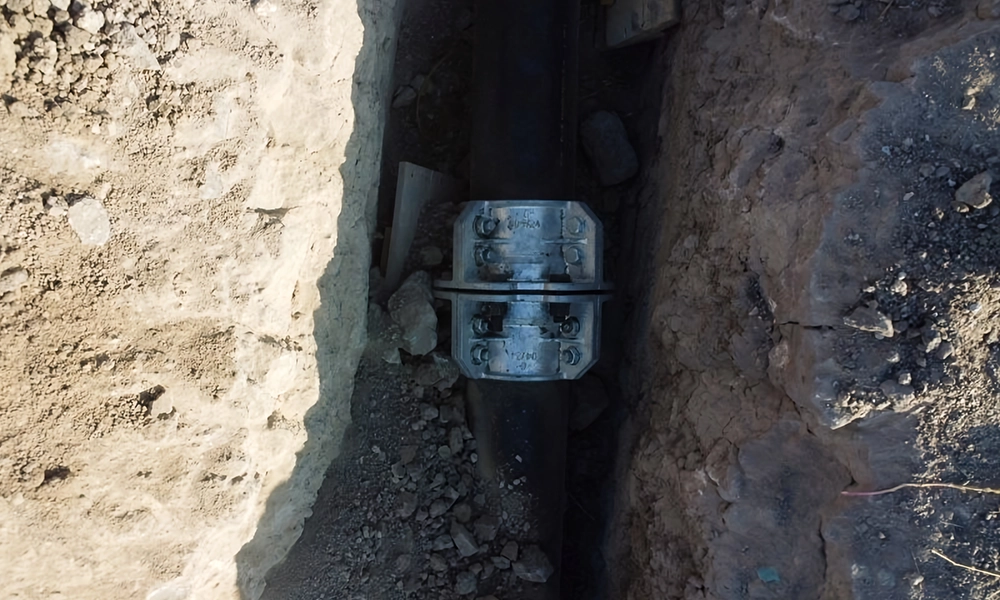
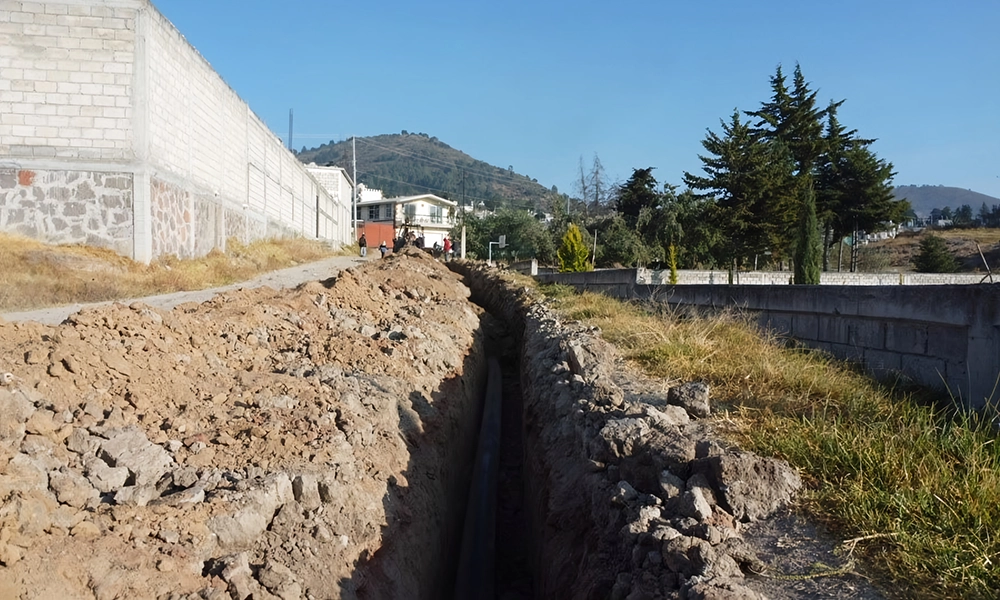
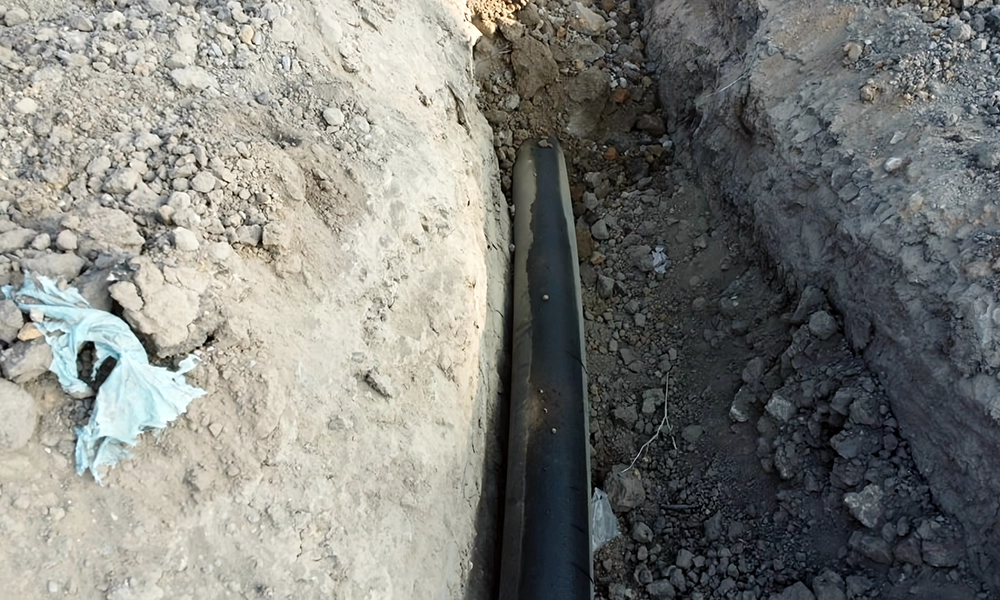
A total of 630 meters of 6” SDR 9 Pexgol pipe were installed, integrating into the system a flanged coupling, with the objective of ensuring greater hydraulic stability against water hammer events generated by well operation.
Thanks to its crosslinked molecular structure (PE-Xa), Pexgol provides superior resistance to transient overpressures and dynamic stresses, reducing the risk of failure compared to the previously installed HDPE pipe. This allowed improved operational reliability without modifying the existing route or incorporating additional protection devices.
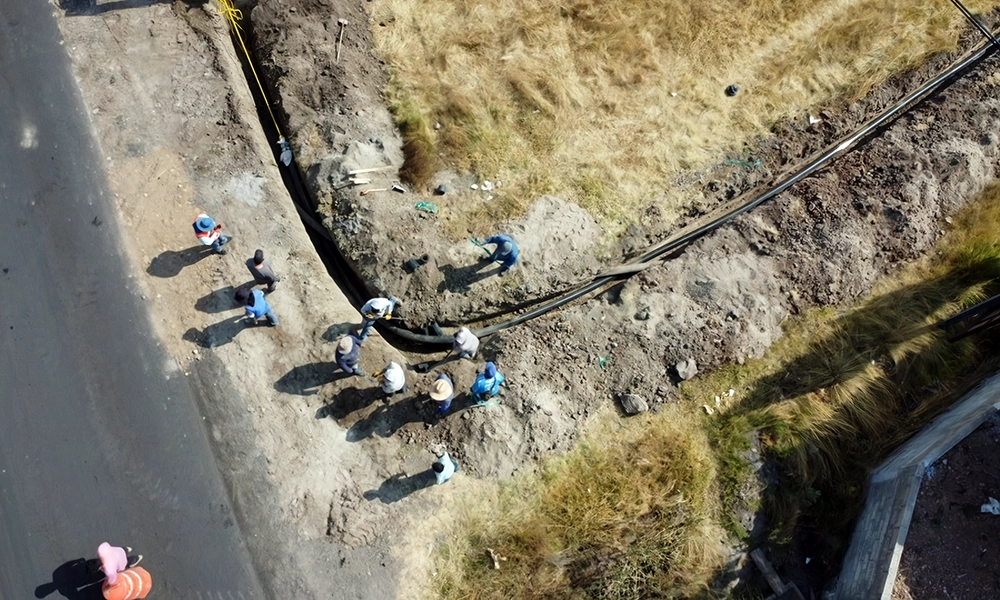
The installation was carried out with limited resources and with the support of community personnel, under specialized technical supervision. Despite logistical constraints, water supply was restored in just two days, minimizing the impact on the community.
Additionally, the reduced trench depth requirement (0.60 m) allowed installation along the original route, avoiding deep excavations and additional infrastructure removal work. The result was a faster, more efficient solution with extended service life for the potable water system.
Related Case Studies
Palm Oil: Transport of Leached Mud
|
Transport of Hot Air for Advanced Agriculture
|
High Pressure Dewatering in Open Pit Mine
|
Fresh Water Line Optimization in an Oil Field in Argentina
|