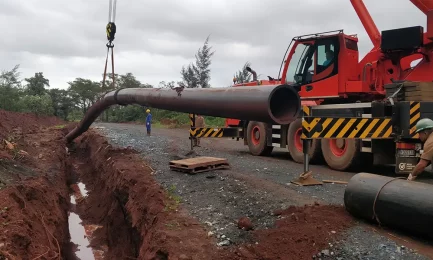



Comprehensive Redesign of the PumpingSystem with Pexgol at the Sossego Mine
Replacing HDPE pipes with Pexgol allowed Vale to simplify operations, eliminate auxiliary equipment, and achieve a permanent installation under extreme conditions.
Estudo de Caso Nº
183
Cliente
|
Condições de Trabalho
Solução Pexgol
Aplicação
Comprimento
Categorias
The Challenge
With the depletion of the tailings dam at the Sossego mine, located in Canaã dos Carajás (Brazil), Vale needed to implement a new, reliable, and cost-effective pumping system capable of transporting recovered water back to the processing plant.\
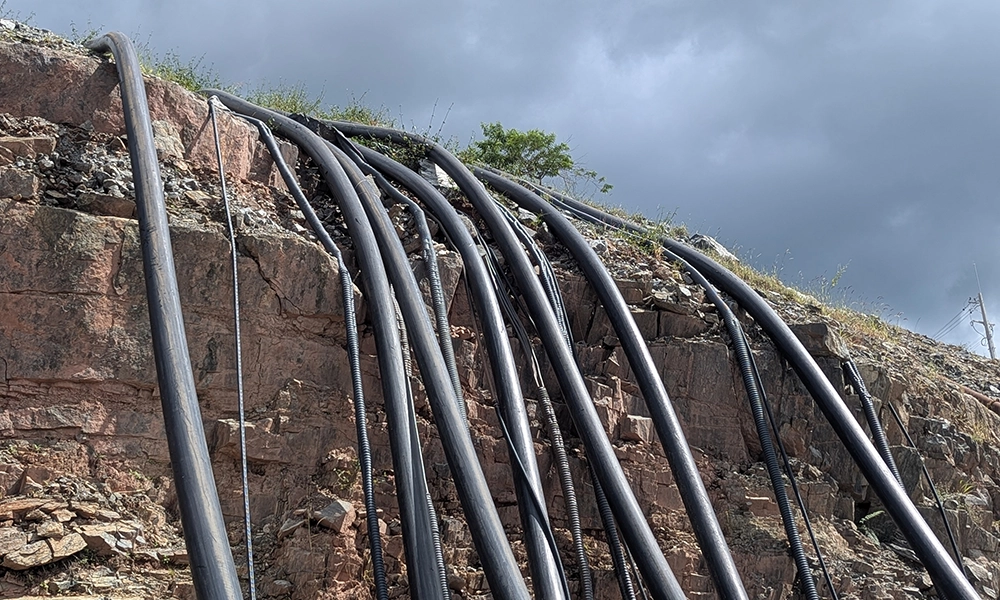
The main challenge lay in the extremely demanding geographical conditions of the open-pit mine, with significant elevation differences and very rocky terrain.
Vale initially considered using conventional HDPE PE100 PN25 pipes. However, due to the excessive number of welds required, the system presented high risk, especially given the flow and pressure fluctuations within the mine.
This equipment posed additional operational hazards and demanded constant dismantling and relocation of pipe sections and supports by the personnel.
The total scope included more than 5,600 meters of piping, 466 unions, and a highly complex infrastructure with numerous electrofusion fittings and electrical controls. Vale required a more reliable, simple, resistant, and faster alternative—one capable of ensuring long-term operational continuity and minimizing shutdown times.
The Solution
Choosing Pexgol Ø355 mm Class 30 was a key decision for the project. Thanks to its unique mechanical properties—high flexibility, abrasion resistance, creep resistance, and durability under aggressive conditions—the pipe could fully withstand the demands of the new pumping system.
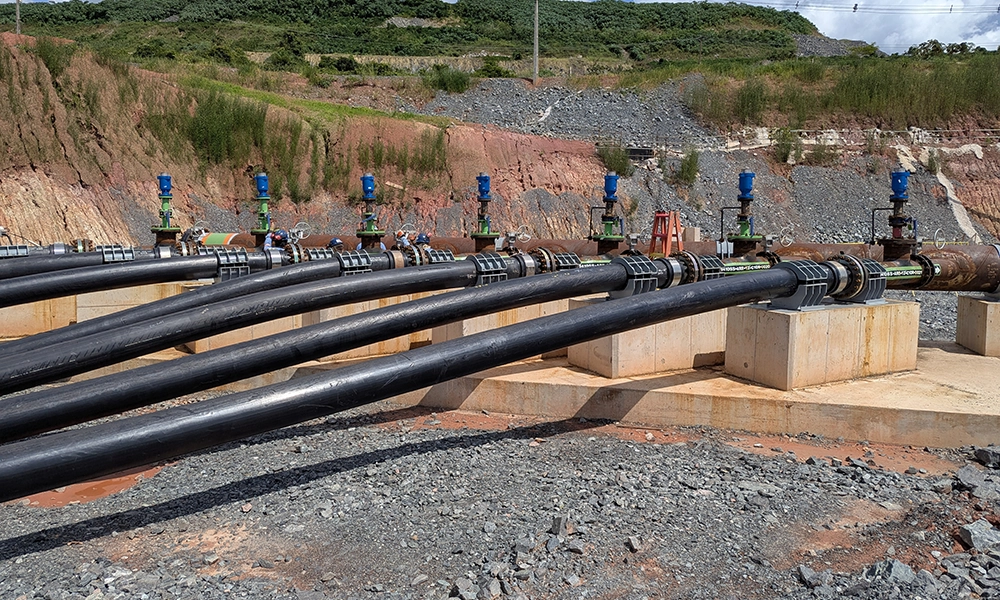
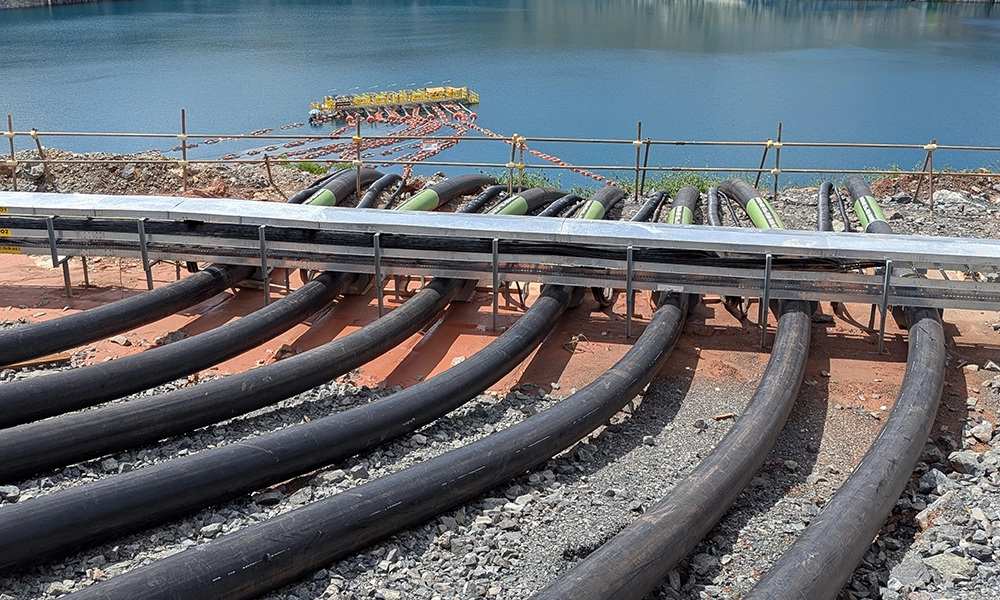
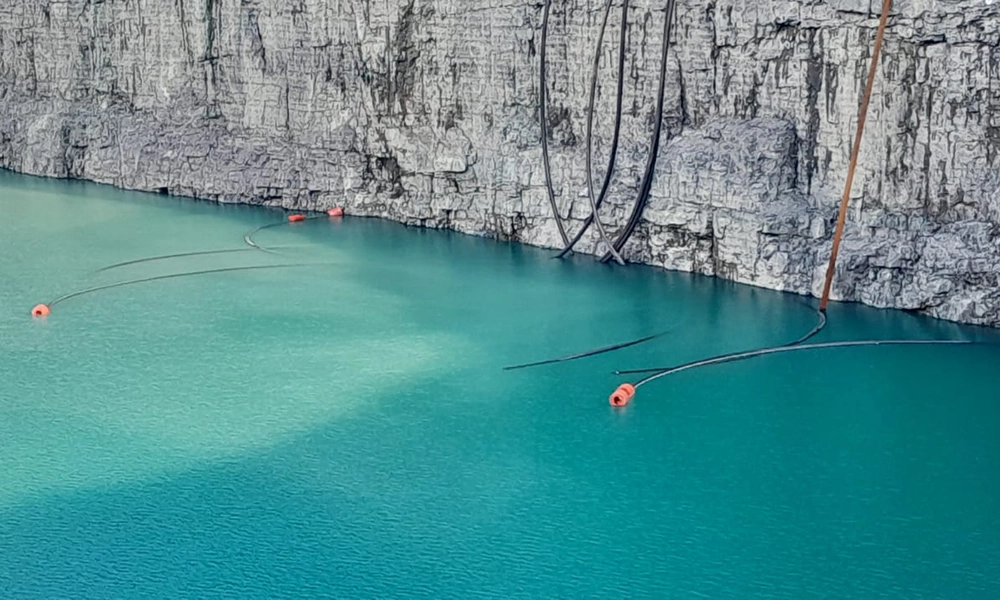
The redesign reduced the critical 250-meter section to 1,750 m of Pexgol pipe installed in seven independent lines, placed directly on rocky soil without the need for additional supports.
The new system includes:
- 7 pumps of 542 HP each, operating with float switches.
- 1,750 meters of Ø355 mm Pexgol pipe on 100 m and 50 m coils.
- A fully automated system with frequency inverters and transformers for continuous operation.
- ANSI Series 300 flanges, electrofusion saddles, and stiffening rings at each pump.
- Local installation support from distributor local Rolcon, and weekly coordination with Vale, excavation, and operational teams.
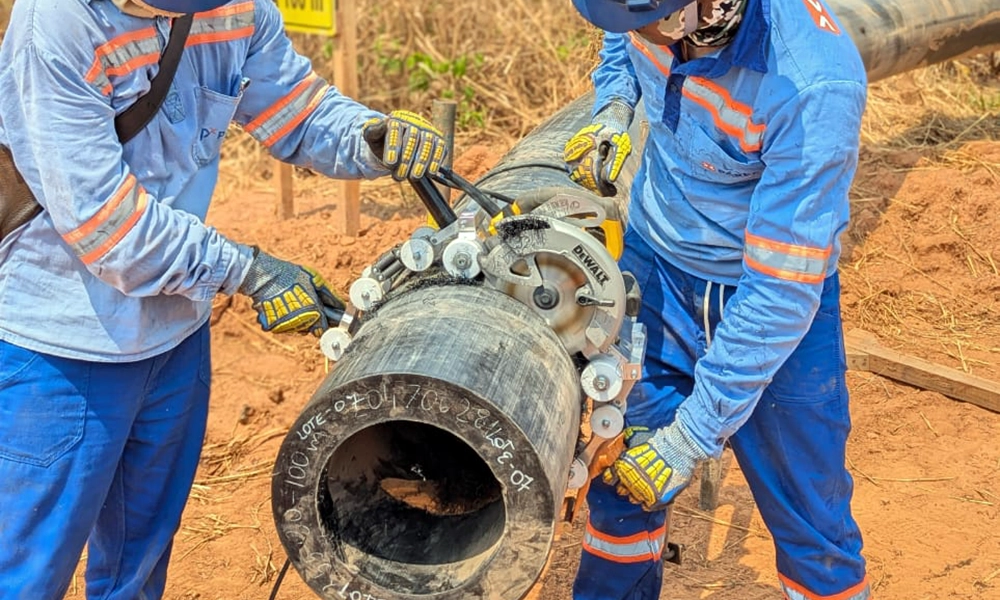
Flexibility of Pexgol pipe minimized on-site unions thanks to long coil lengths, reducing welds and installation times, as well as significantly lowering potential failure points.
Results
| Description | Before (HDPE) | After (Pexgol) |
|---|---|---|
| Total length | 5.600 m | 1.750 m |
| Welds | 466 | 28 |
| Floaters | 175 | 7 |
| Electrical centers | 2 | 1 |
| Distribution network | 19 km | 12 km |
| Total platform weight | 130 tons | 61,5 tons |
| Booster system | 7 × 250 HP | Eliminated |
Estudos de Caso Relacionados
Fiber Optic Cables Through a Vertical Shaft
|
High Pressure Dewatering in Open Pit Mine
|
Leached Slurry Transportation
|
Recovered Water Transportation
|